Learn Agentic AI Fundamentals
A hand-picked set of 10 animated visuals covering AI fundamentals, agentic AI, and enterprise architecture — the same concepts I use with Fortune 500 teams.
This is a free teaser from my full Visual AI Guide. No email required. Scroll and learn.
Part 1 of 3
AI Fundamentals
The mental model most builders skip. Get this right and everything downstream — RAG, agents, fine-tuning — stops feeling like magic.
 Tap diagram to view full size
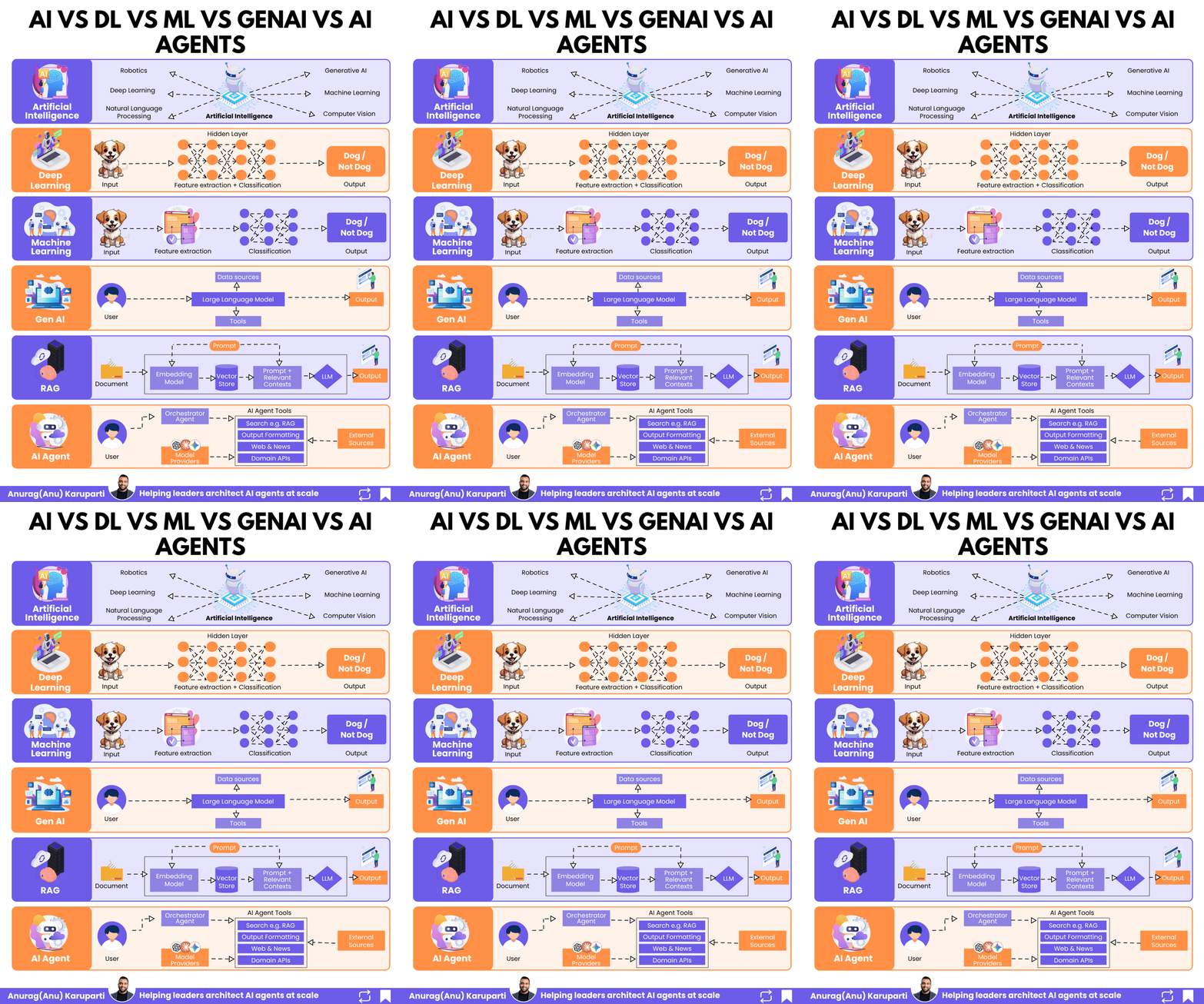
AI vs ML vs DL vs GenAI vs RAG vs AI Agents
Before you build anything, you need a clean mental model of what sits where. AI is the umbrella. ML is pattern learning. Deep learning is ML with neural networks. GenAI creates new content. RAG grounds GenAI in your data. Agents give GenAI tools and goals.
 Tap diagram to view full size
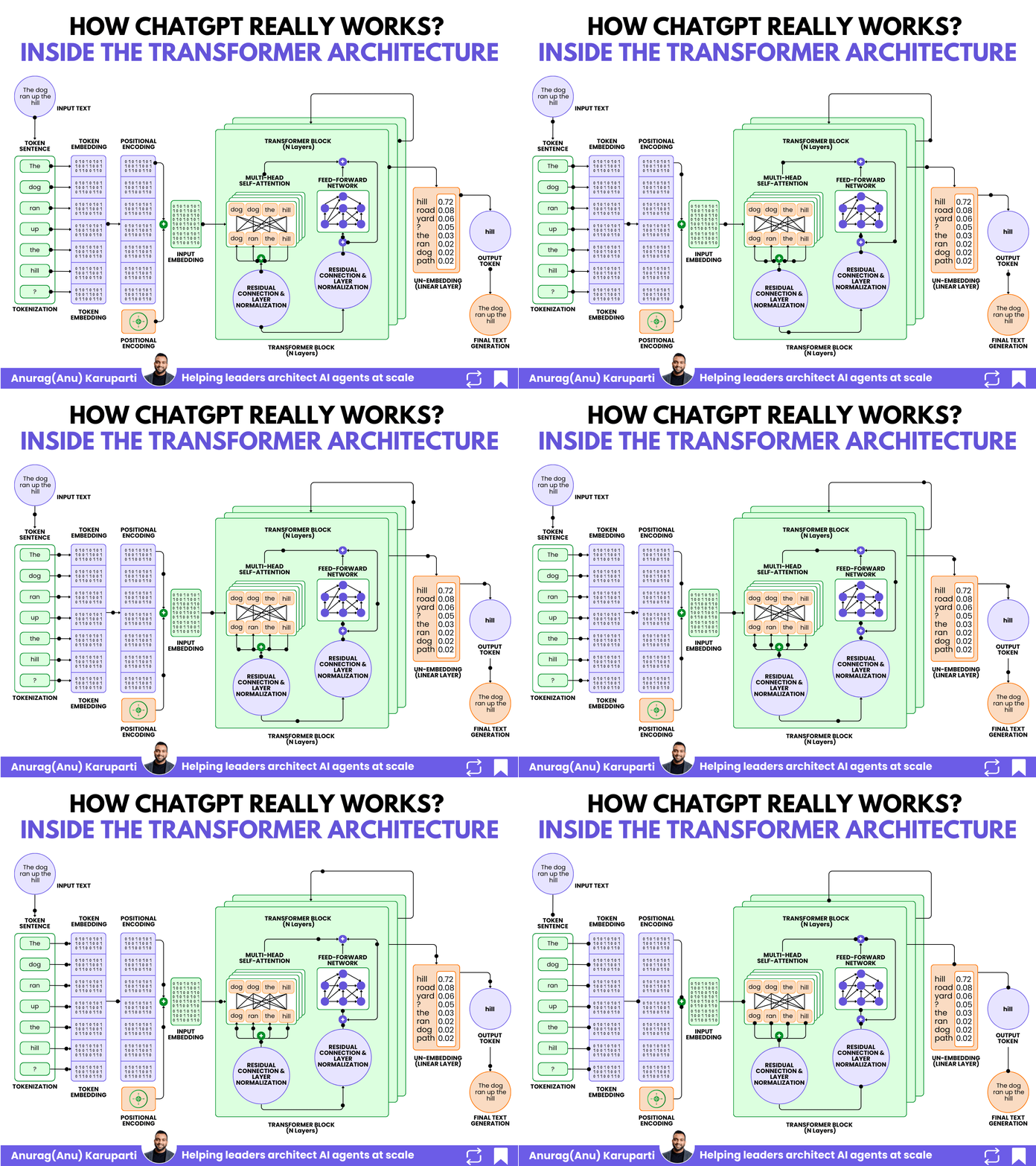
How ChatGPT Really Works — Inside the Transformer
Tokenize → embed → attention → feed-forward → predict the next token, repeat. That is the whole trick. The magic is attention: every token looks at every other token and decides what is relevant, in parallel.
 Tap diagram to view full size
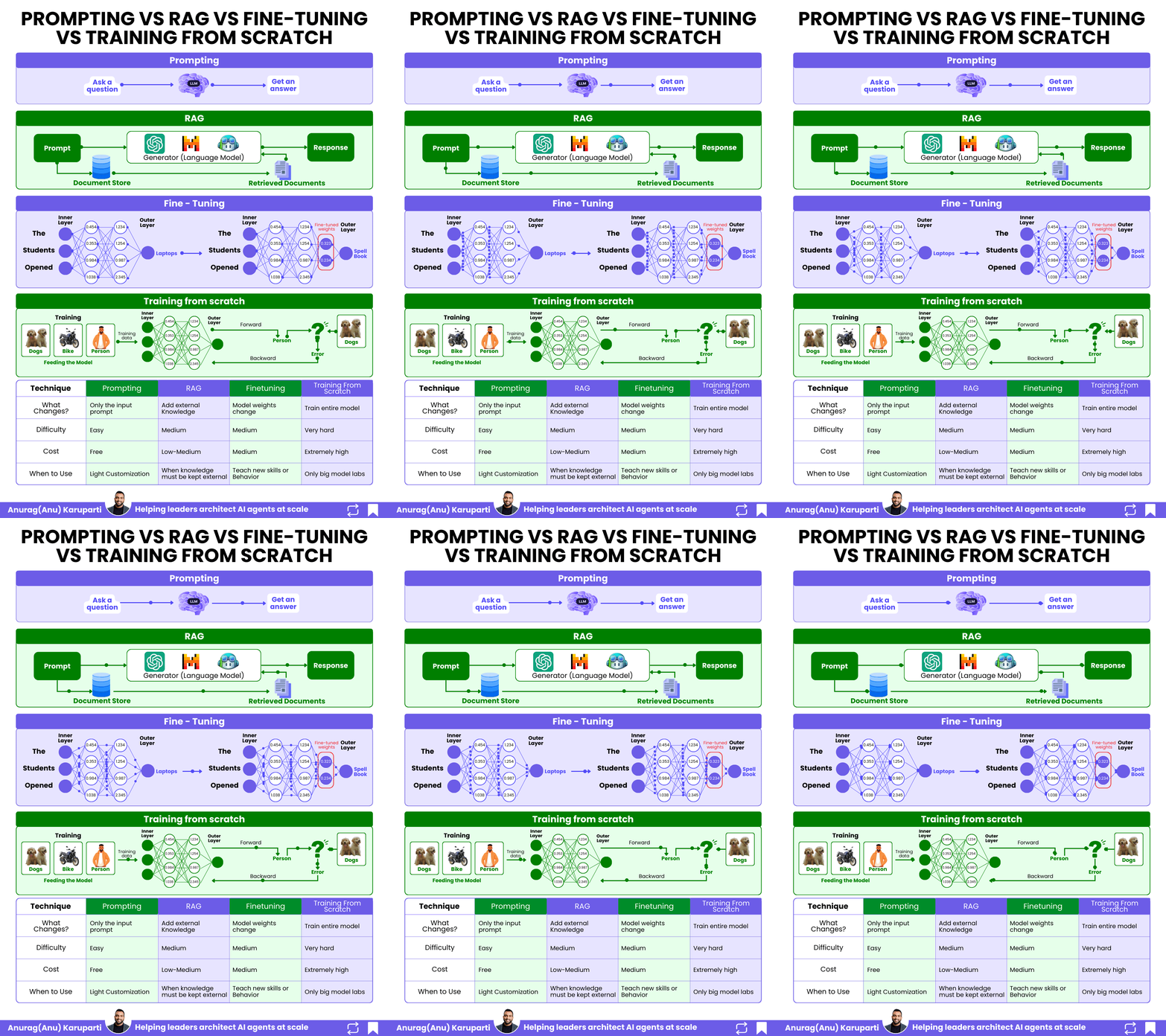
Prompting vs RAG vs Fine-tuning vs Training from Scratch
Four levers, radically different cost and control. Prompting: minutes, cheap, no data moat. RAG: days, grounds answers in your docs. Fine-tuning: weeks, shapes tone and format. Training from scratch: quarters and millions of dollars.
Like these? The full Visual AI Guide has 68+ animated visuals.
The paid guide covers every pattern I use in Fortune 500 production deployments — architecture, RAG, agents, governance, Azure landing zones, and security.
Get the Full Guide on GumroadPart 2 of 3
Agentic AI
Where the industry is heading. Agents reason, use tools, hold memory, and collaborate. These four visuals lay out how.
 Tap diagram to view full size
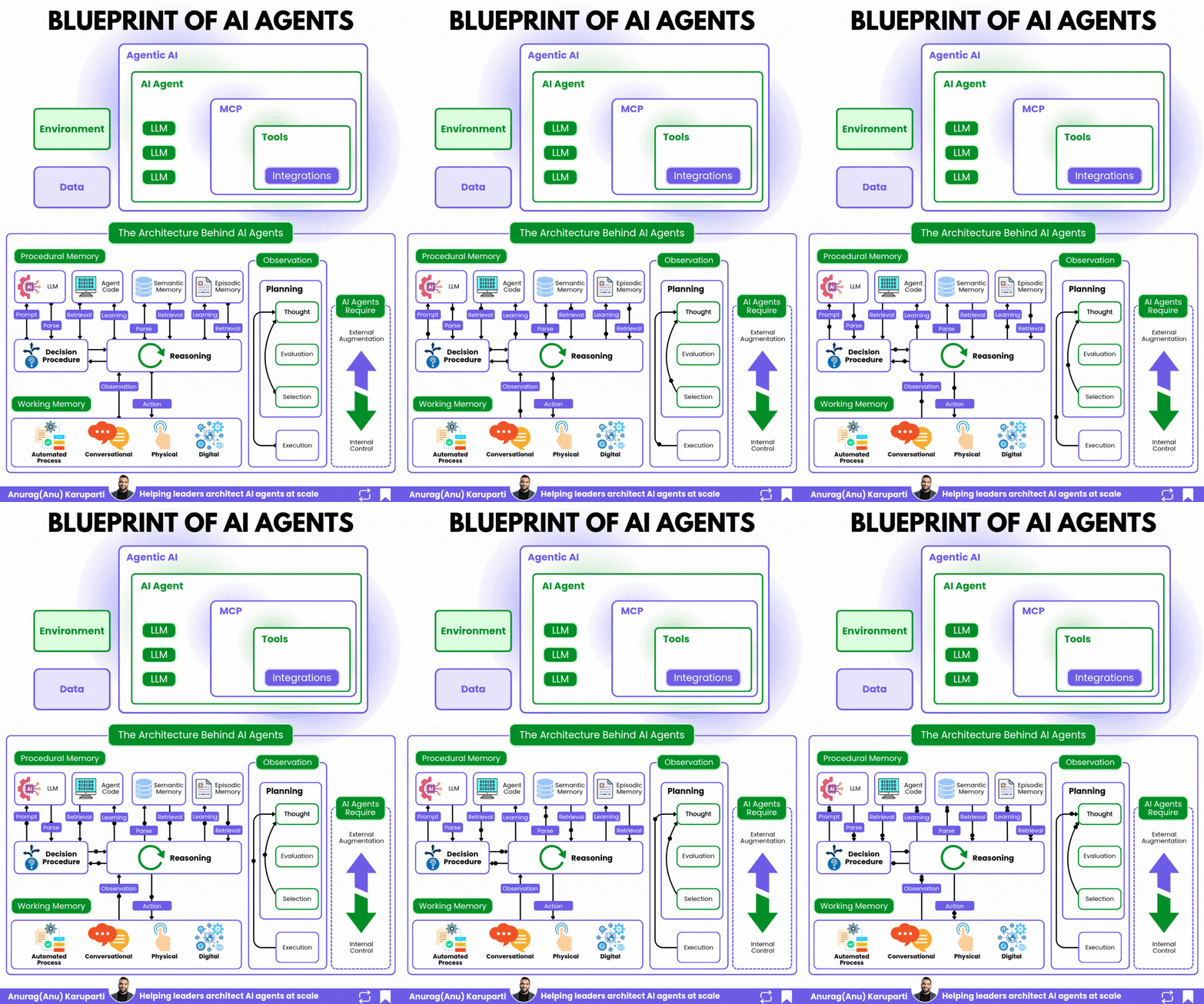
Blueprint of AI Agents
Every real agent is the same set of moving parts: an LLM doing the reasoning, a planning loop (thought → evaluation → selection → execution), layered memory (working, semantic, episodic, procedural), a decision procedure, and tools/MCP connecting it to the environment. Strip any of those out and you do not have an agent — you have a chatbot.
 Tap diagram to view full size
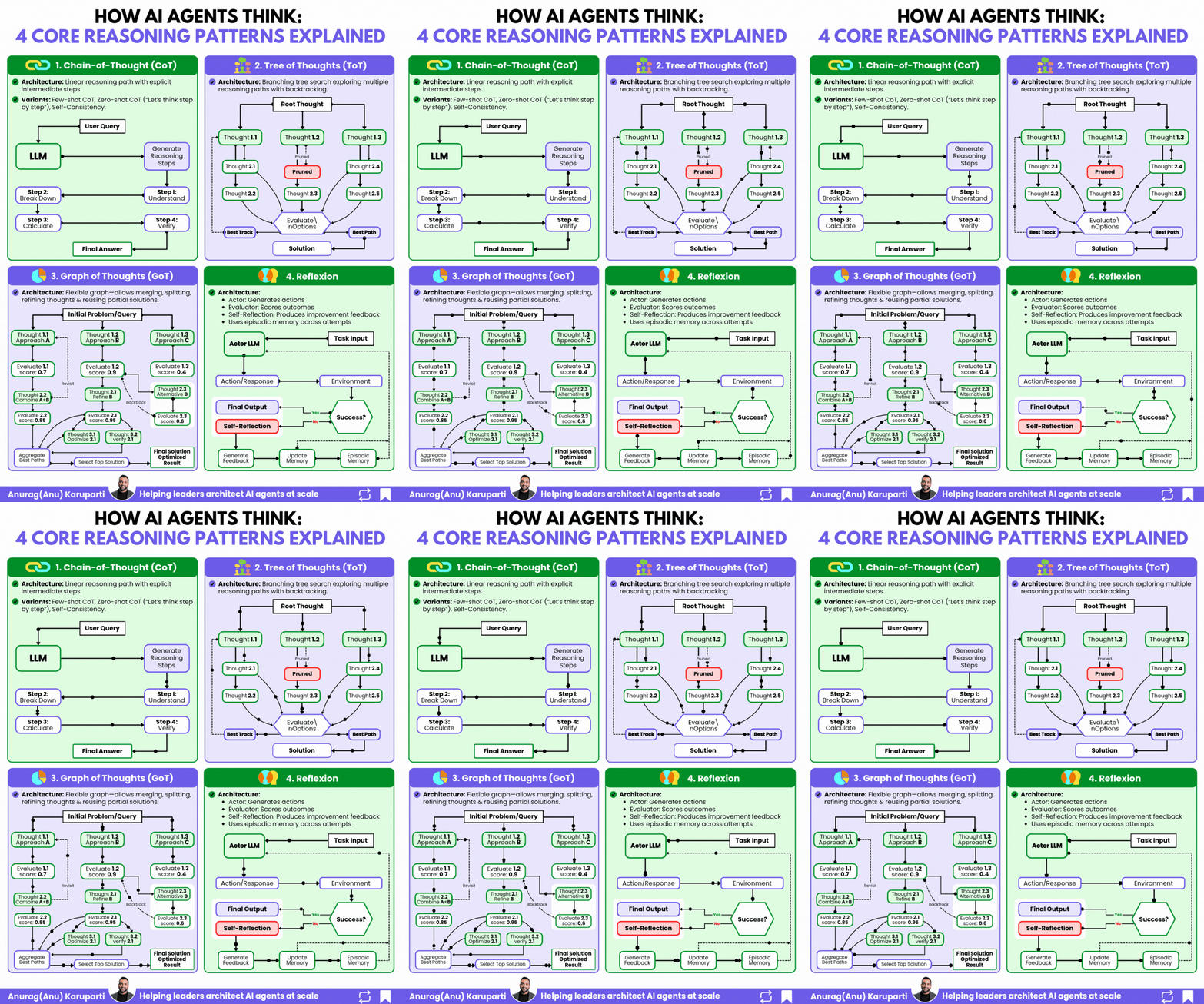
How AI Agents Think — 4 Core Reasoning Patterns
Agents do not just answer — they reason. Chain-of-Thought walks the problem step by step. Tree-of-Thought explores branches and prunes. Graph-of-Thoughts goes further, aggregating across paths in a graph. Reflexion critiques its own output and retries with verbal self-feedback.
 Tap diagram to view full size
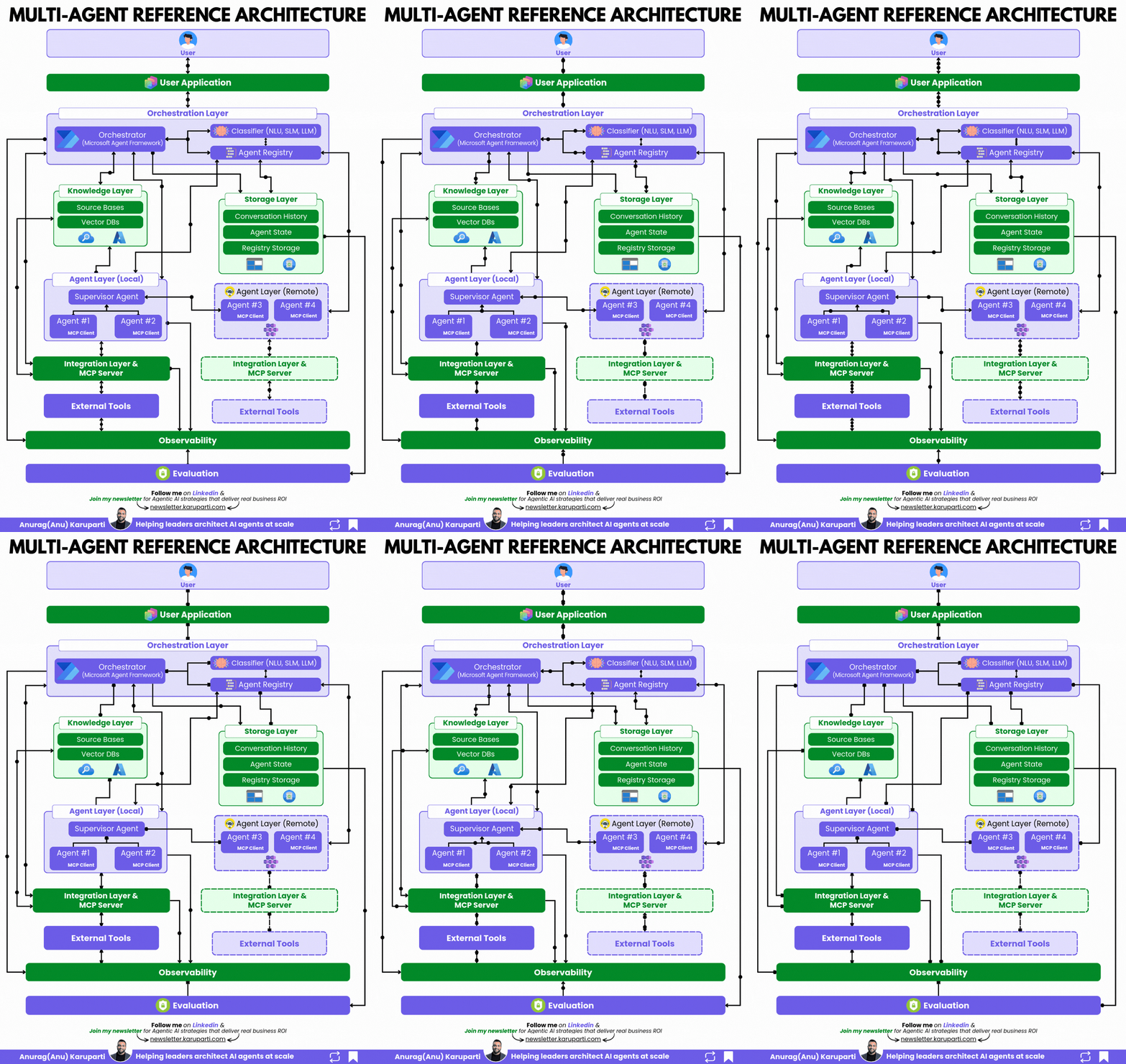
Multi-Agent Reference Architecture
The full production stack, end to end: an orchestration layer routing to local and remote agents, MCP servers connecting tools, a knowledge layer with structured and vector data, plus observability and evaluation threaded through every hop.
 Tap diagram to view full size
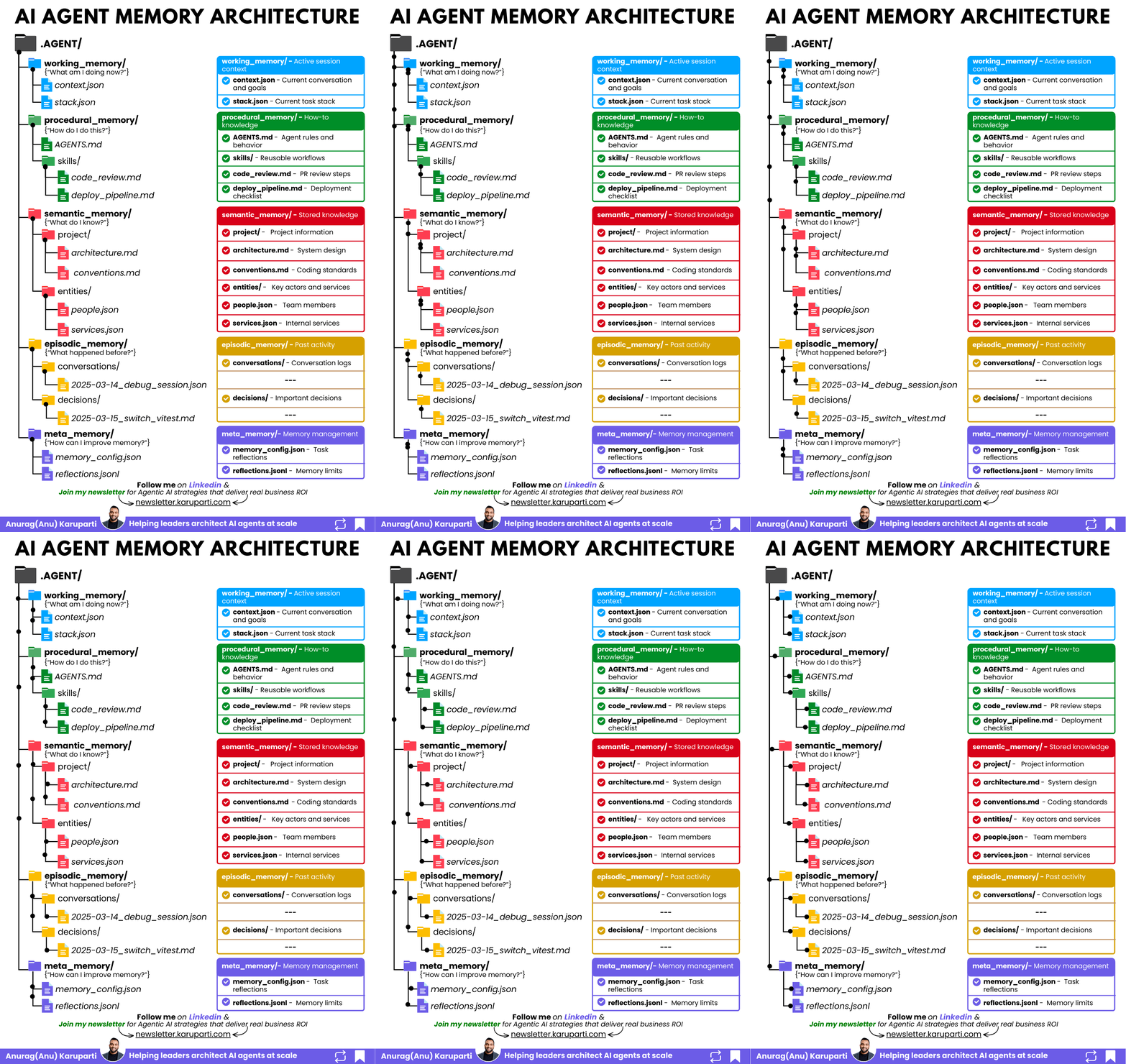
AI Agent Memory Architecture
Agents need more than a context window. Working memory holds the current task. Semantic memory stores facts. Episodic memory remembers past interactions. Procedural memory encodes how to do things. Meta memory — memory about memory — is what lets the agent reflect on what it knows and tune its own retrieval.
Part 3 of 3
Enterprise AI
What changes when AI has to pass through security, governance, and SRE. These three patterns are where most enterprise programs either scale or stall.
 Tap diagram to view full size
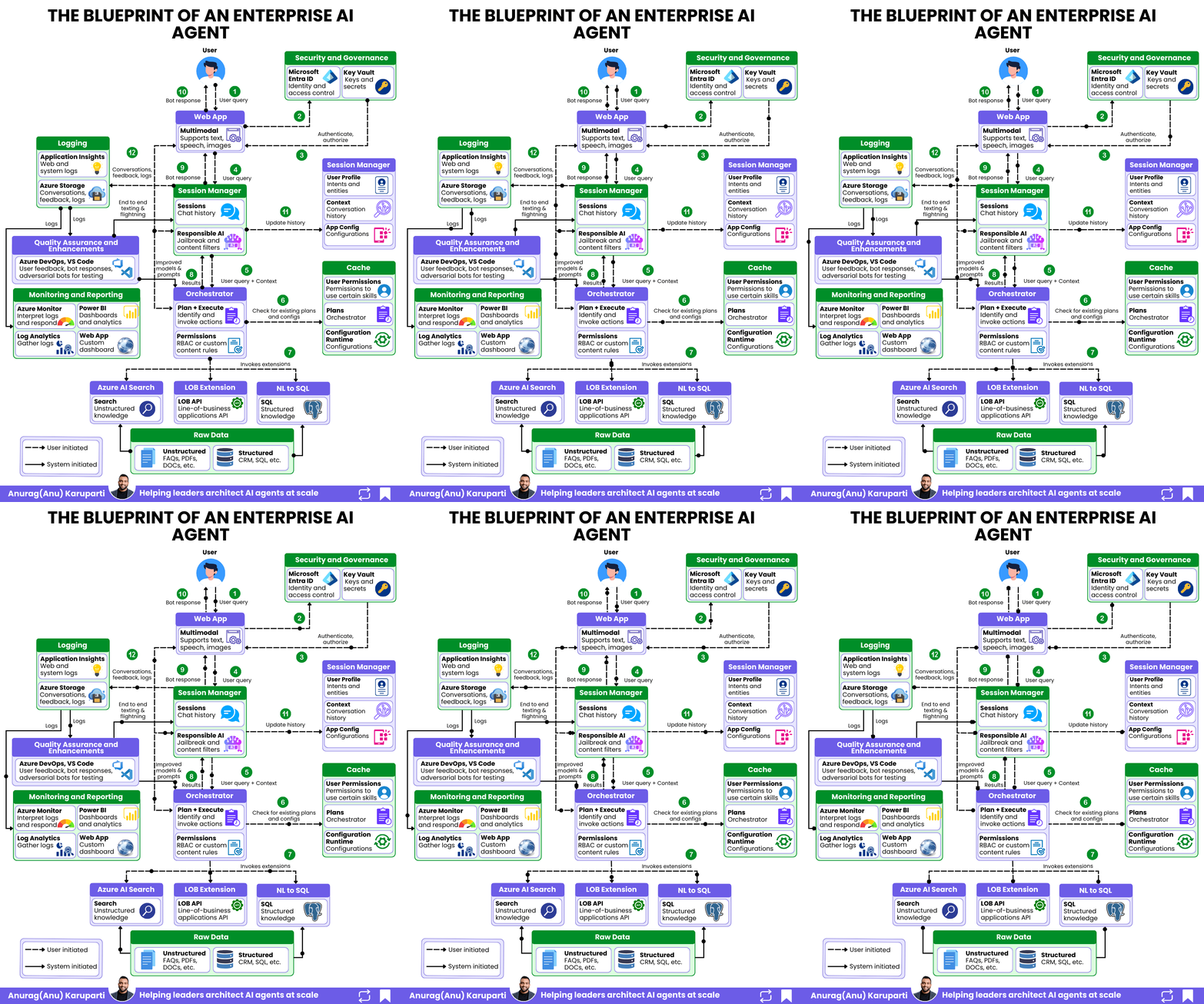
The Blueprint of an Enterprise AI Agent
An enterprise agent carries weight a prototype does not: Entra ID for SSO, Key Vault for secrets, RBAC on every tool call, Responsible AI content filters, App Insights and storage for audit logging, and adversarial QA bots for red-teaming. Same agent loop, ten times the scaffolding.
 Tap diagram to view full size
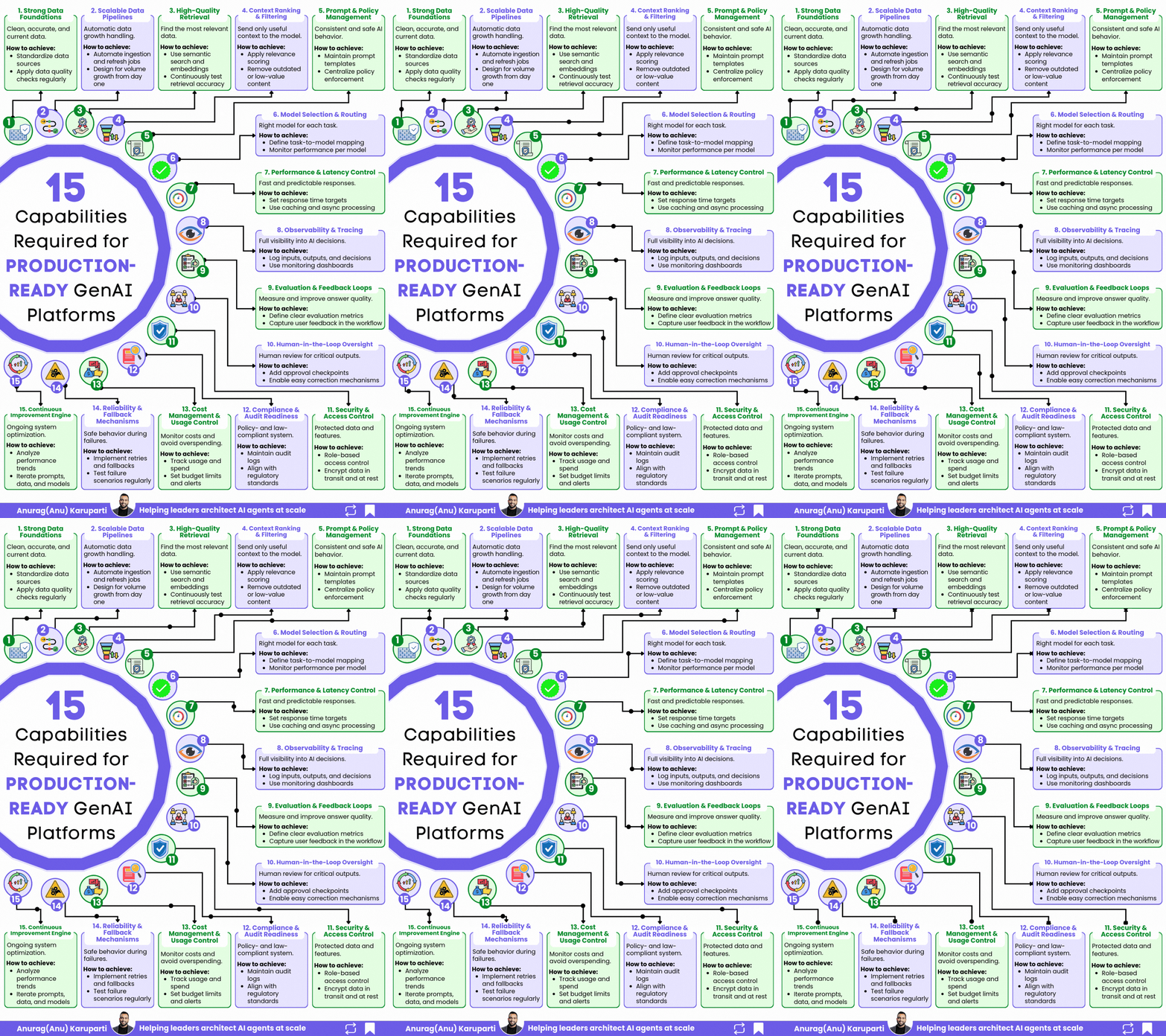
15 Capabilities for Production-Ready GenAI Platforms
The checklist separating pilots from platforms: strong data foundations, scalable data pipelines, high-quality retrieval, context ranking and filtering, prompt and policy management, model selection and routing, performance and latency control, observability and tracing, evaluation and feedback loops, human-in-the-loop oversight, security and access control, compliance and audit readiness, cost management, reliability and fallback, and a continuous improvement engine.
 Tap diagram to view full size
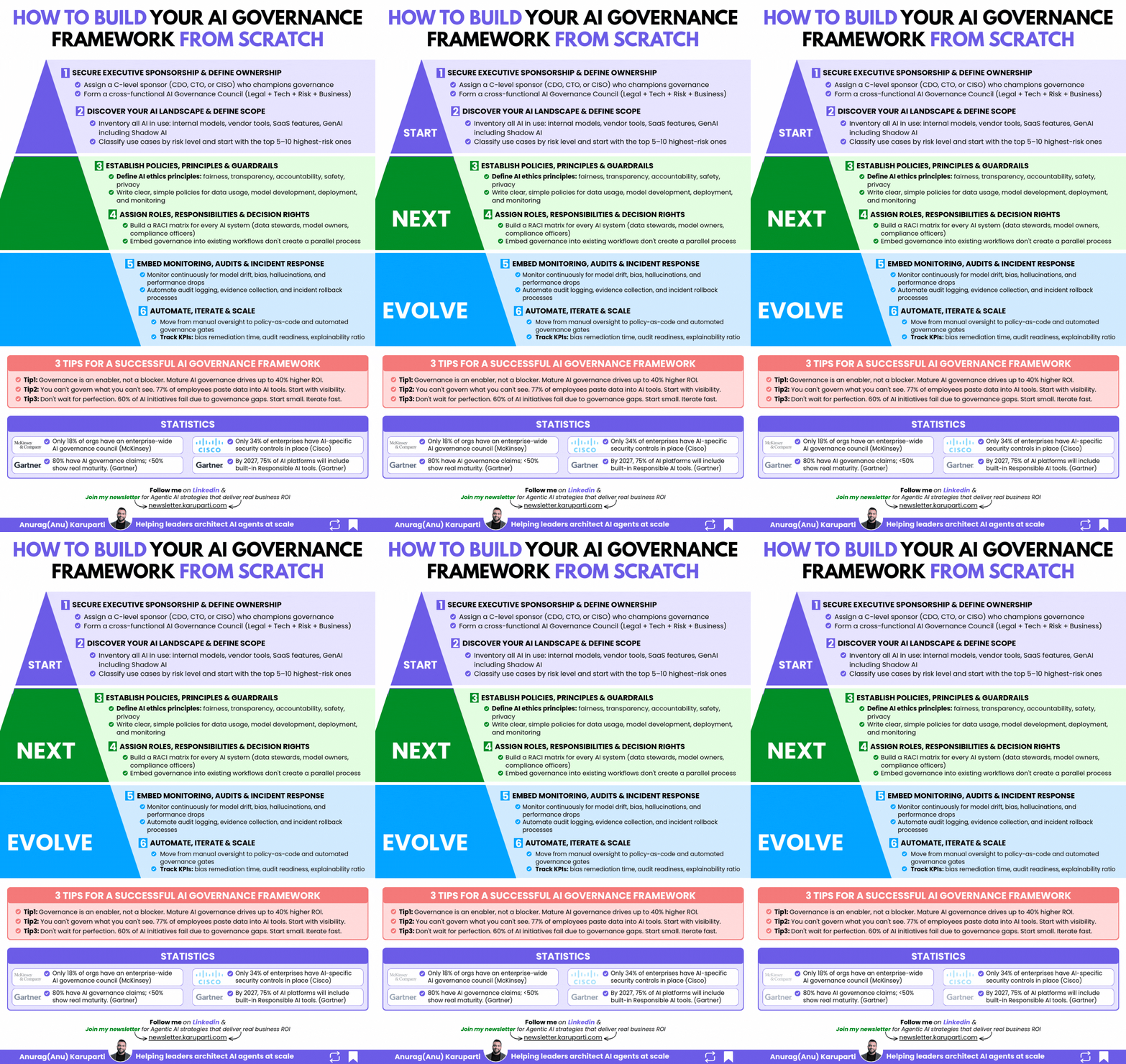
AI Governance Framework
A governance program is built in six steps: secure executive sponsorship, discover your AI landscape, define policies and guardrails, assign roles and a RACI, stand up monitoring and incident response, then automate and scale. Skip a step and the later ones quietly fail.
That is 10 of 68+ visuals. Grab the full Visual AI Guide.
Lifetime access. PDF + all animated GIFs. Used by AI engineers and architects at Microsoft, Google, IBM, Dell, and more.
Get the Full Guide on Gumroad